




-
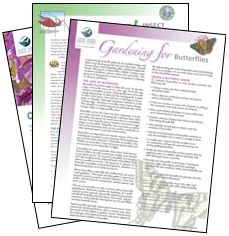 Booklets & handouts
Booklets & handouts
Take a closer look at the ways in which we’ll help you access the facts about wildlife. Whether it’s discovering the Hinterland Who’s Who animal fact sheets, or ordering our handy field guide to Canada’s prevalent shoreline species. </p> <h4>This content is available to our CWF Supporters and online members. Please sign in to order your free materials.<
More -
-
 Wallpapers
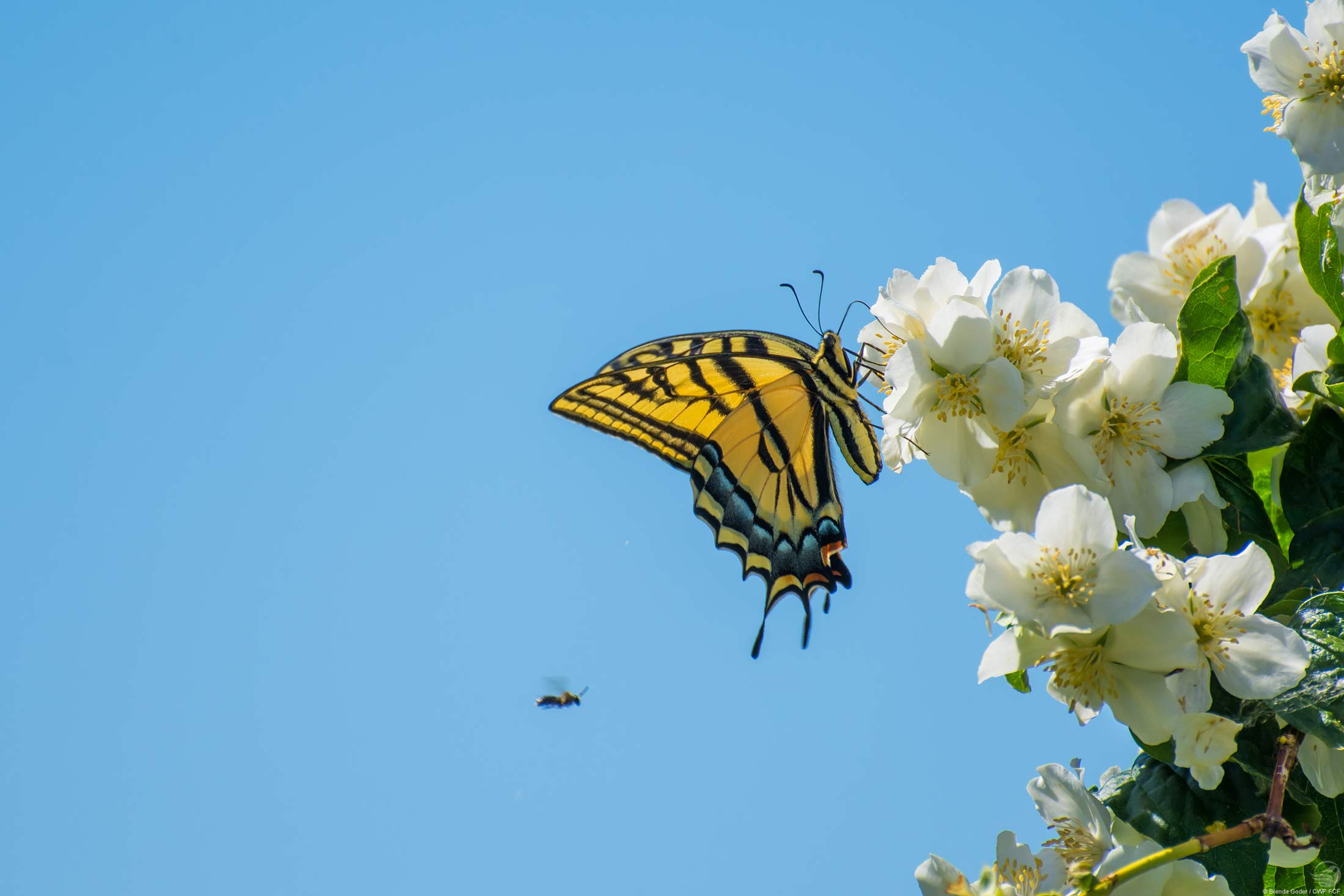
Wallpapers
Your desktop is the perfect habitat for this wild wallpaper. Download CWF wallpapers!
More -
 WILD Webinars
WILD Webinars
With topics relating to conservation, wildlife and habitat, we provide a relevant online learning platform, typically for grades four to six but of benefit to any age.
More

From easy-to-use apps designed as tools for your citizen science projects to picturesque wallpaper images for your computer, CanadianWildlifeFederation.ca offers a variety of useful downloads for your PC and mobile devices.
Coasts & Oceans
Connecting With Nature
-
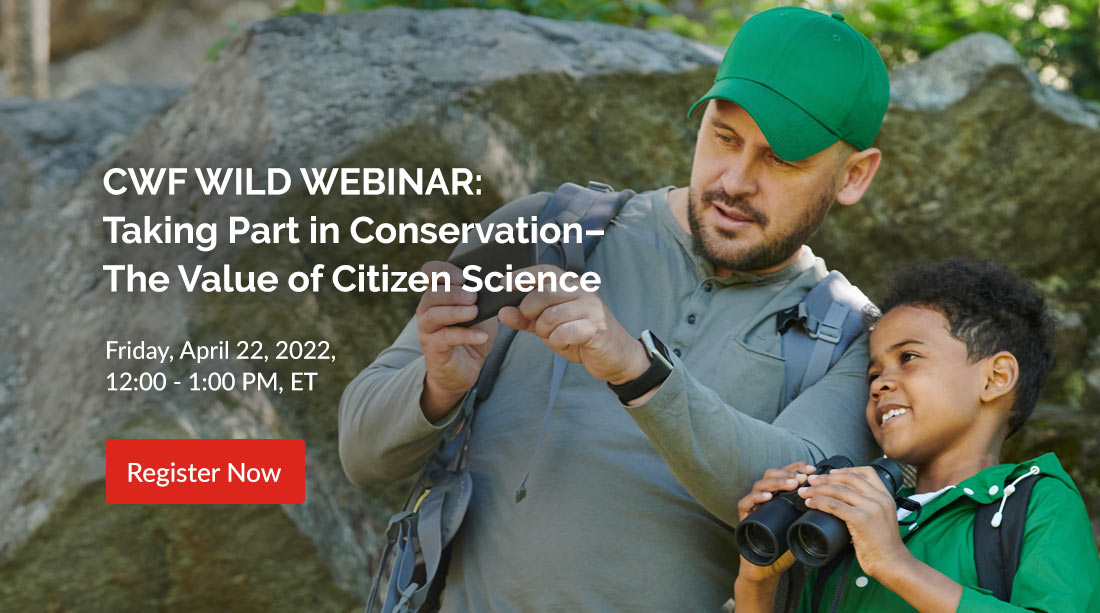
Taking Part in Conservation: The Value of Citizen Science
2025-12-05
April 22, 2022: English 12-1 ET, French 2-3 ET.. Join the Canadian Wildlife Federation in celebration of Earth Day and CWF’s 60th anniversary in learning how you can contribute to conservation using just a phone or digital camera. Ordinary people turned citizen scientists are contributing valuable information every day to help conserve our natural world. Through apps and websites like iNaturalist Canada and initiatives like the City Nature Challenge, thousands of people are contributing millions of observations, filling gaps that scientists can’t accomplish on their own. Join CWF’s English Webinar with James Pagé to hear about the value of citizen science data and how to take part. Join CWF’s French webinar with Alexandre Anctil (of the Centre de données sur le patrimoine naturel du Québec) to hear about the value of citizen science to the Quebec Conservation Data centre and how to take part.
-
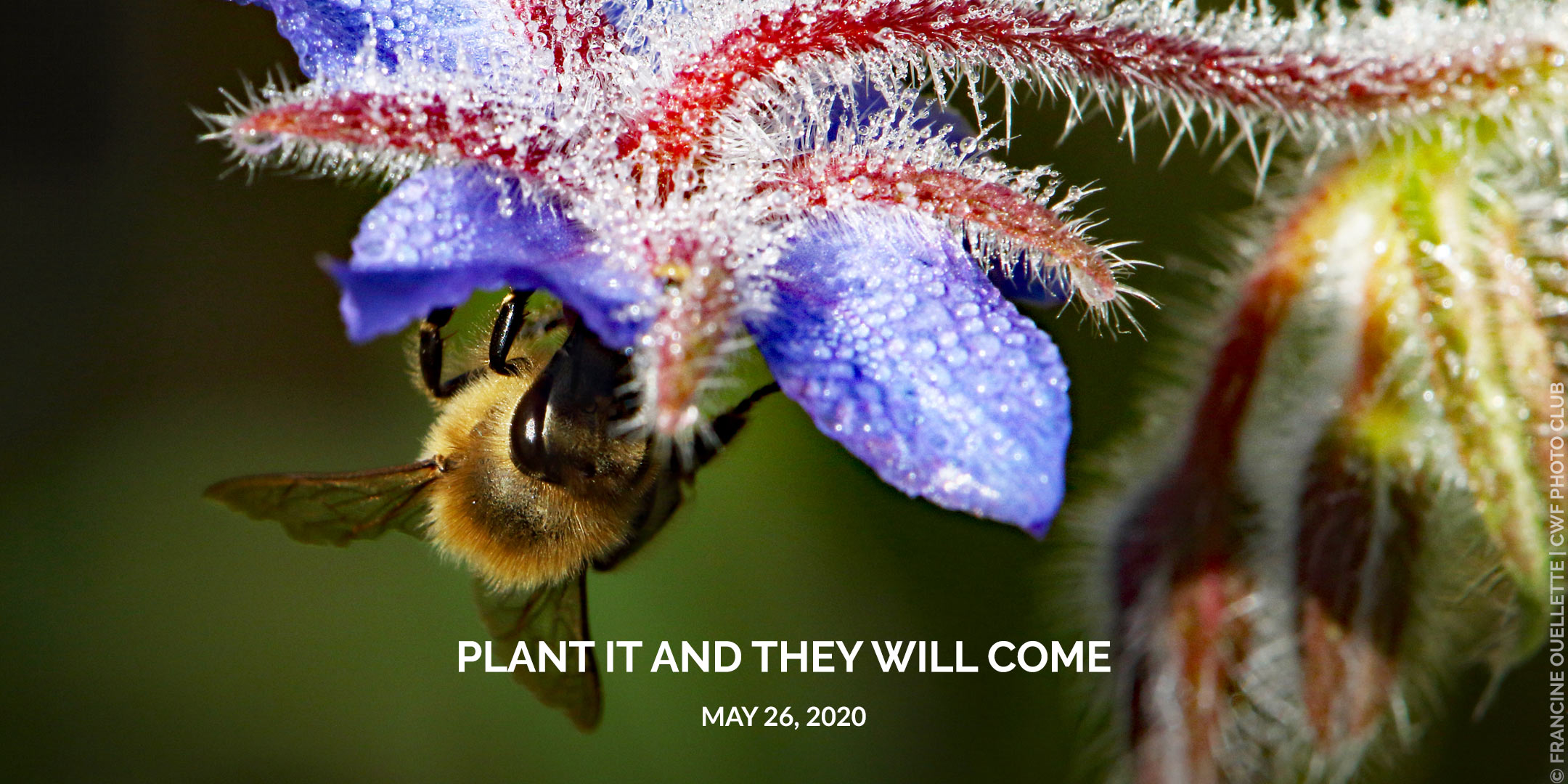
Plant It and They Will Come
2025-12-05
How one woman discovered the joys of creating a wildlife-friendly garden. Join CWF as Berit Erickson, pollinator garden blogger, shares her urban garden’s transformation from ornamental to wildlife-friendly. Discover how much easier it was than she thought and all the benefits she and her family now enjoy. So if the idea of creating a wildlife-friendly garden is daunting to you or you just want to get some new ideas, join us for this informative and inspiring webinar.
-
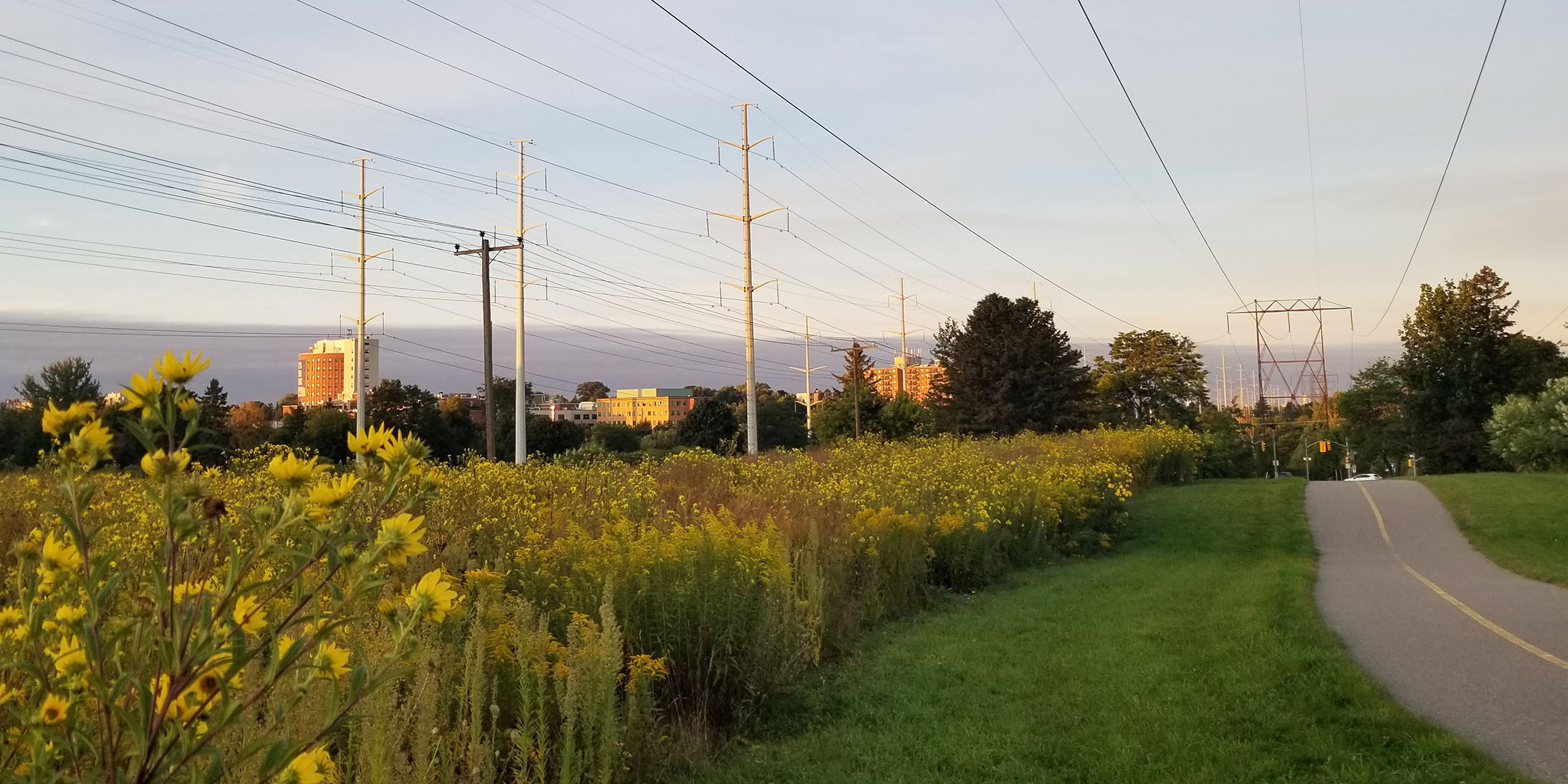
The Meadoway: Planning and Restoring Pollinator Habitat in a utility corridor in Toronto, Ontario
2025-12-05
The Meadoway is transforming a hydro corridor in Scarborough, ON into a vibrant sixteen-kilometre stretch of urban greenspace and meadowlands that will become one of Canada’s largest linear urban parks. Cyclists and pedestrians will soon be able to travel from the heart of downtown Toronto to Rouge National Urban Park without ever leaving nature. Over the next seven years, this site will become a place filled with butterflies, birds and wildflowers – a rich meadow landscape realized on a scale never before seen in Toronto. This webinar will help to showcase and walk you through the overall planning, permits/policies, education/outreach, communication and meadow restoration needed to create a project similar to The Meadoway.
-
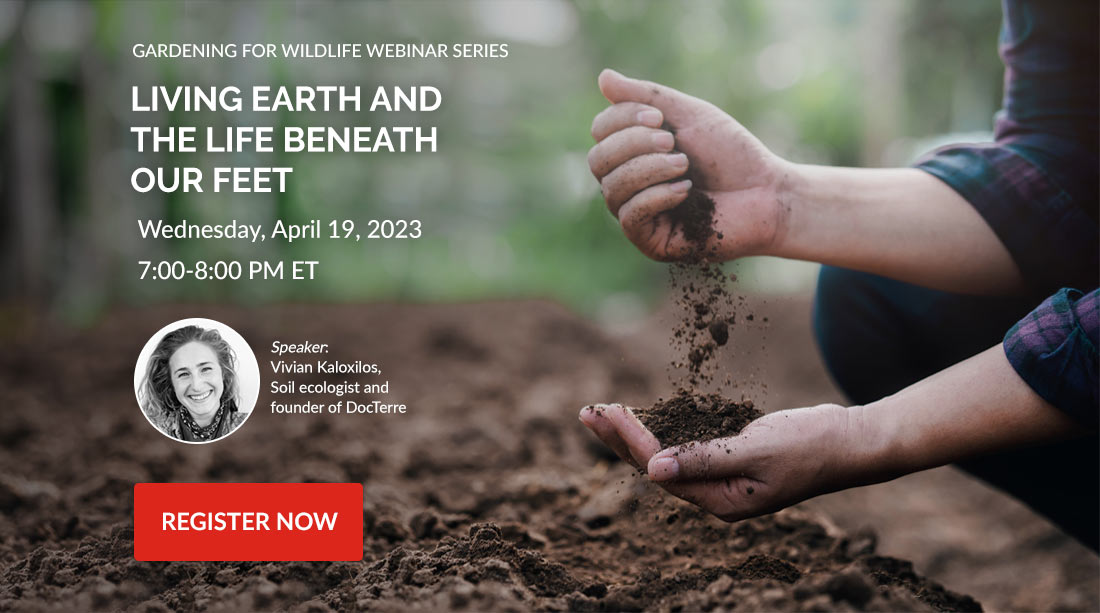
Living Earth and the Life Beneath Our Feet Webinar
2025-12-05
Join CWF Wednesday, April 19th at 7:00 p.m. ET for an eye-opening webinar with Vivian Kaloxilos, soil ecologist and founder of DocTerre, on the incredible interactions between soil organisms and plants. We live on planet Earth, but many people don't understand what soil is and how it functions. We will explore the living ecosystem in the soil and how it supports all life on Earth. You will also discover simple ways you can enhance your plants’ vitality and production in your own outdoor space. We hope you can join us!
-
iNaturalist CSI: Invasive Plants
2025-12-05
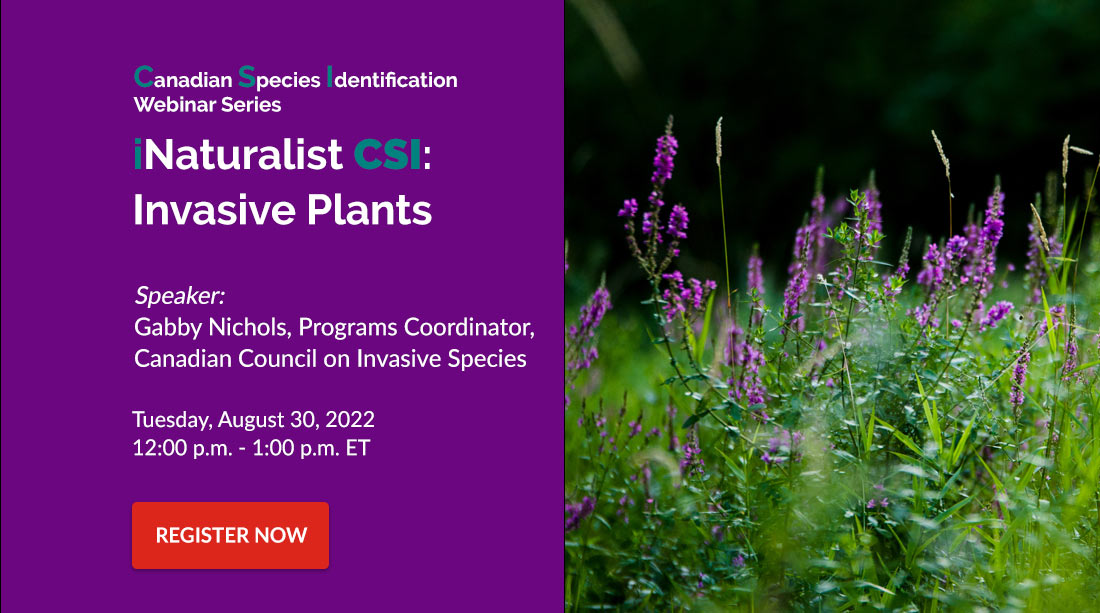
Join the Canadian Wildlife Federation (CWF) for a webinar on how to photograph and identify Canada’s top 10 invasive plants using iNaturalist.ca, presented by the Canadian Council on Invasive Species (CCIS). Nearly one-fifth of the Earth’s surface is at risk of plant and animal invasions. Invasive species are threatening Canada’s ecosystems, economy and communities. Climate change is also exacerbating this issue and can make ecosystems more vulnerable to invasive species, and invasive species can worsen the impacts of climate change. The good news is - you can help! Learn how to ID Canada’s top 10 invasive plants so you can report them, helping to stop their spread. Every report helps scientists track and protect Canada’s natural spaces and biodiversity from the negative impacts of invasive species. iNaturalist has become one of the world’s most popular nature apps and the Canadian Wildlife Federation has led the charge in bringing it to the forefront of Canadian citizen science. Date: August 30th, 12:00-1:00 Eastern
Education & Leadership
Endangered Species & Biodiversity
Forests & Fields
-
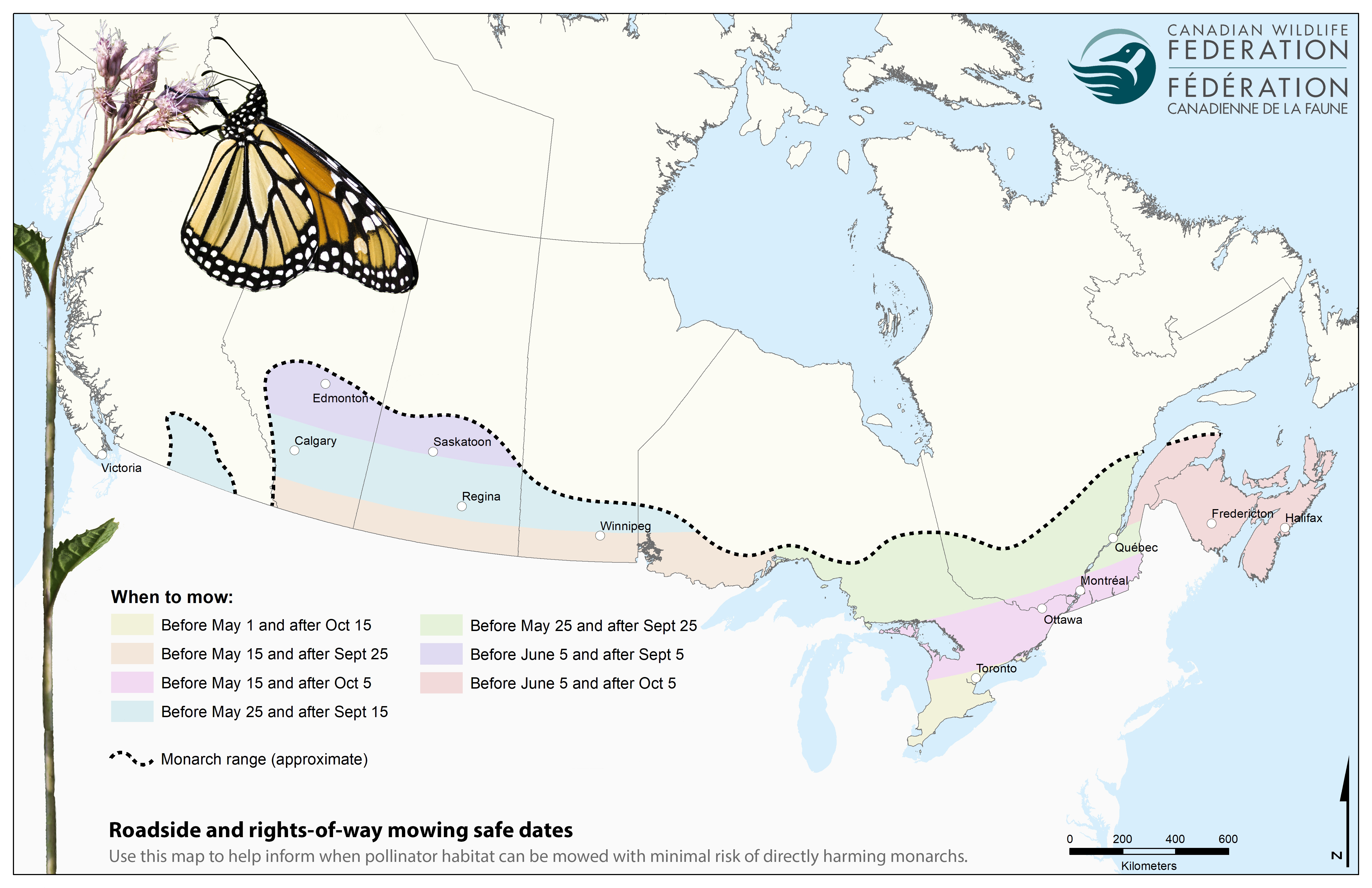
Spring Monarch Mowing Map
2025-12-03
-
Helping Canada’s Pollinators in The Garden
2025-12-05
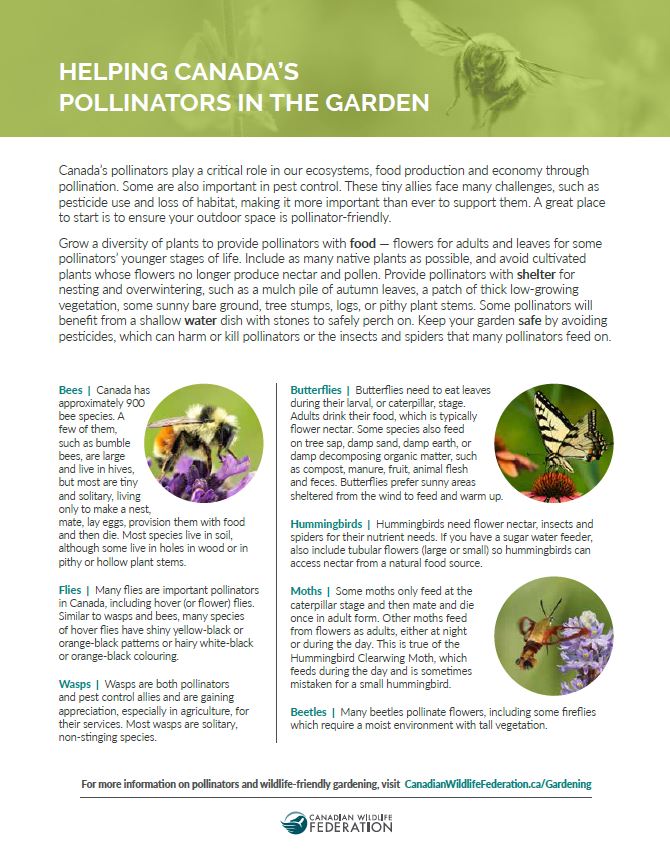
Canada’s pollinators play a critical role in our ecosystems, food production and economy through pollination. Some are also important in pest control. These tiny allies face many challenges, such as pesticide use and loss of habitat, making it more important than ever to support them. A great place to start is to ensure your outdoor space is pollinator-friendly.
-
Milkweed Species of Canada
2025-12-05
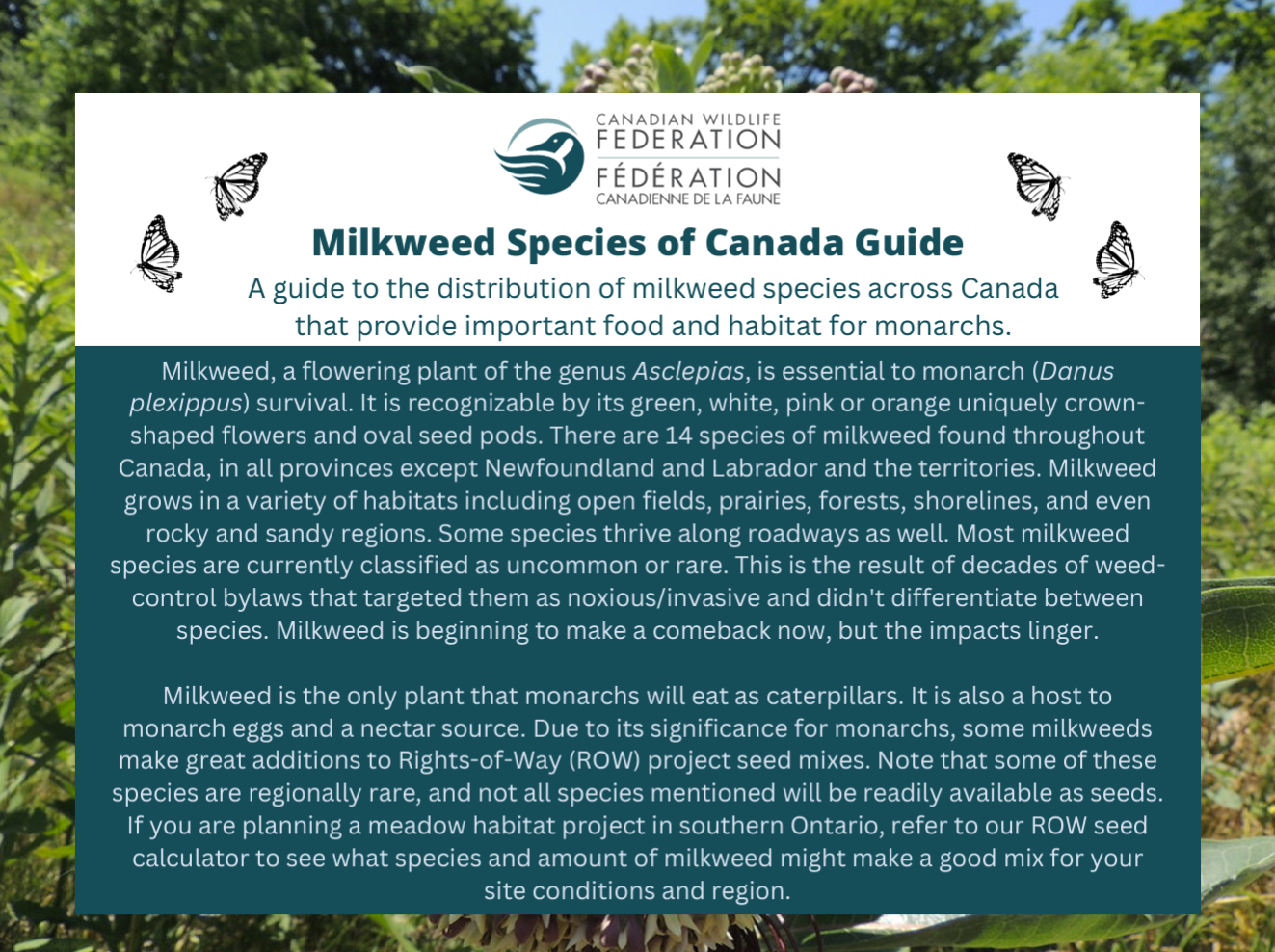
A guide to the distribution of milkweed species across Canada that provide important food and habitat for monarchs.
-
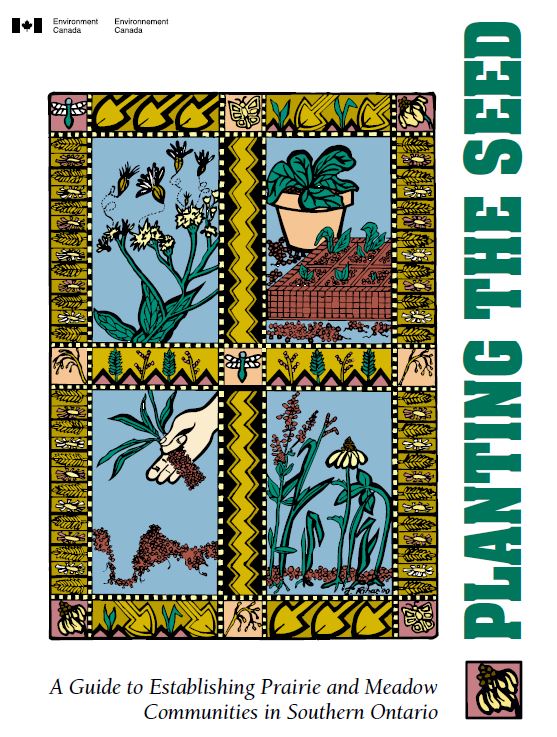
Planting the Seed: A Guide to Establishing Prairie and Meadow Communities in Southern Ontario
2025-12-05
Prairie and meadow are complex communities and even the best attempts to recreate them will be simplified versions that do not fully replace the ones that have been lost. For this reason, protecting existing natural habitat should always be a top priority. If habitatcreation projects are well executed, however, they can provide a significant contribution to the conservation of wildlife...
-
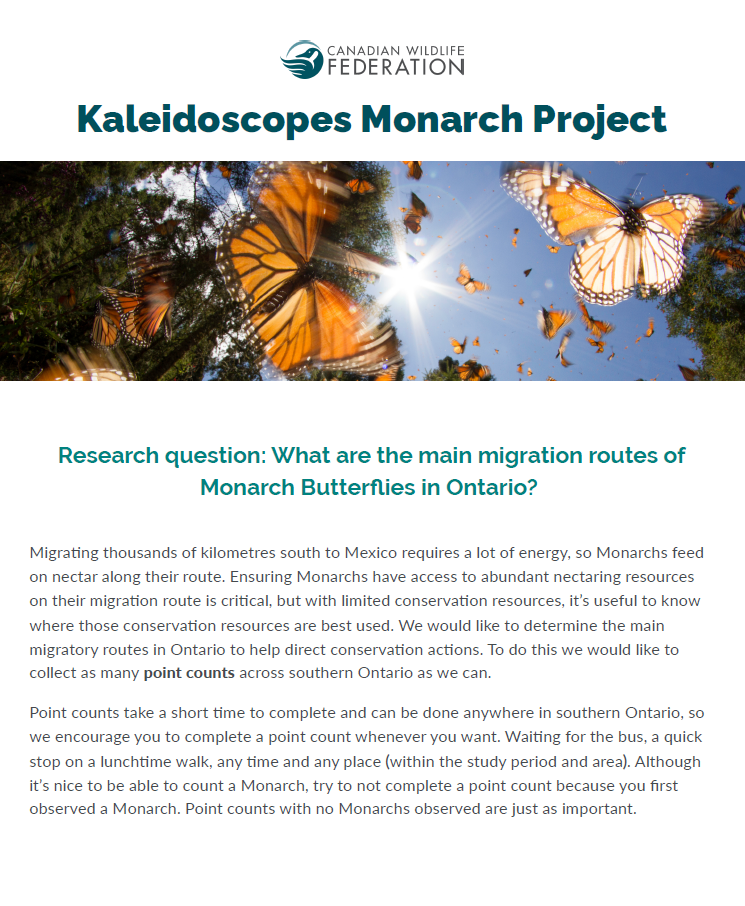
Monarch Point Count Data Guide
2025-12-05
Lakes & Rivers

Learn More

- 0
- 1
- 2
- 3